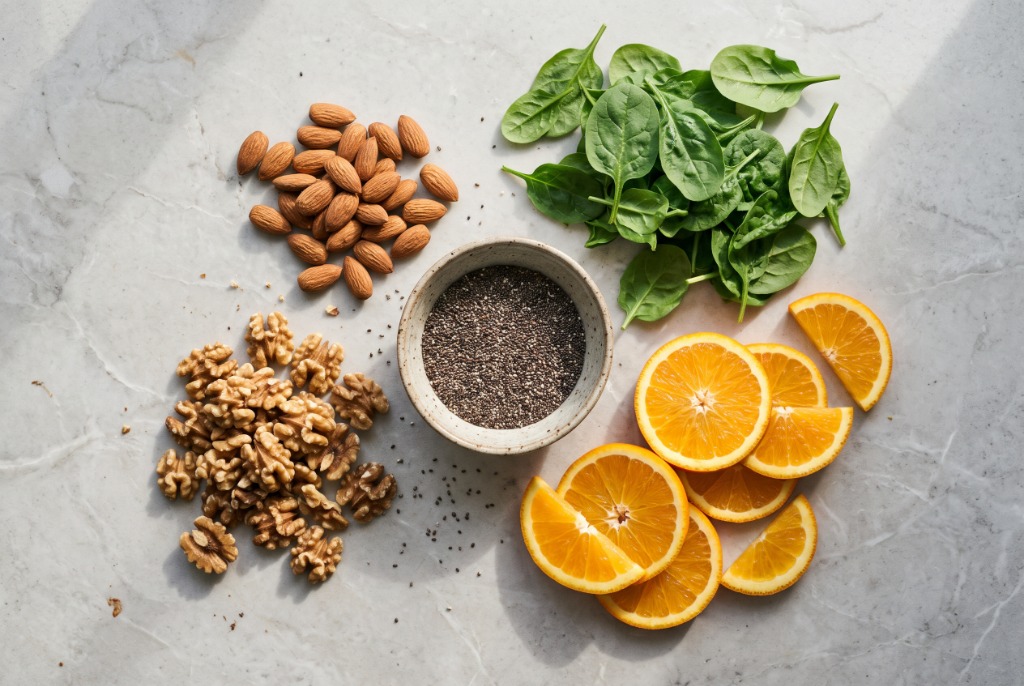
Building Blocks of Cellular Metabolism
Cellular energy synthesis is a multi-step biochemical sequence. Explore how vitamins, essential minerals, and botanical antioxidants work together to sustain natural daily stamina without artificial stimulants.
View Nutrient Reference TableB-Vitamin Complex in the Mitochondria
Water-soluble B-vitamins serve as indispensable coenzymes that convert dietary carbohydrates, fats, and proteins into usable cellular ATP:
- Vitamins B1, B2 & B3: Drive the citric acid cycle and electron transport chain inside mitochondria.
- Vitamins B5 & B6: Support normal protein and glycogen metabolism as well as mental clarity.
- Folate (B9) & B12: Contribute to normal cell division and help reduce everyday tiredness and fatigue.
Iron, Vitamin C & Trace Minerals
Aerobic cellular respiration depends on a continuous supply of oxygen delivered by iron-dependent proteins and synergistic cofactors:
- Iron (Fe): Essential component of hemoglobin and myoglobin, supporting oxygen delivery throughout the body.
- Vitamin C Synergy: Natural ascorbic acid significantly enhances the absorption of non-heme dietary iron.
- Zinc & Selenium: Participate in normal macronutrient metabolism and cellular protection.

Magnesium and Plant Antioxidants
Inside every cell, ATP molecules must bind to magnesium ions to become biologically active, while antioxidants protect mitochondrial membranes:
- Magnesium (Mg): Supports electrolyte balance, normal muscle function, and protein synthesis.
- Polyphenols & Vitamin E: Help protect cellular structures against oxidative stress generated during active metabolism.
Key Micronutrients & Natural Dietary Sources
The overview below outlines the primary physiological roles of essential vitamins and minerals alongside whole-food sources for a balanced daily plate.
| Micronutrient | Primary Role in Cellular Metabolism | Natural Whole-Food Sources |
|---|---|---|
| Vitamins B1, B2, B3 | Act as coenzymes in converting carbohydrates and fatty acids into cellular energy (ATP) and support nervous system function. | Whole grains, oats, almonds, seeds, legumes |
| Vitamins B5, B6, B12 | Contribute to the reduction of tiredness and fatigue, normal protein metabolism, and red blood cell formation. | Walnuts, avocado, whole seeds, eggs, fish, leafy greens |
| Iron (Fe) | Supports normal oxygen transport in the body, hemoglobin synthesis, and cellular energy-yielding processes. | Spinach, pumpkin seeds, lentils, chickpeas, chia seeds, lean meats |
| Magnesium (Mg) | Maintains electrolyte balance, supports normal muscle contraction, and activates ATP complexes. | Almonds, cashews, chia seeds, dark leafy greens, whole grains |
| Vitamin C & Antioxidants | Increase dietary iron absorption and protect cells from oxidative stress during physical activity. | Oranges, lemons, grapefruit, berries, bell peppers, parsley |